March 10, 2026
Job hunting today is chaotic.
You have dozens of tabs open, links scattered across LinkedIn, company sites, and job boards, and a spreadsheet that slowly turns into a graveyard of applications you barely remember submitting.
I built Blip because I wanted to treat job searching the same way engineers treat projects: as a structured pipeline.
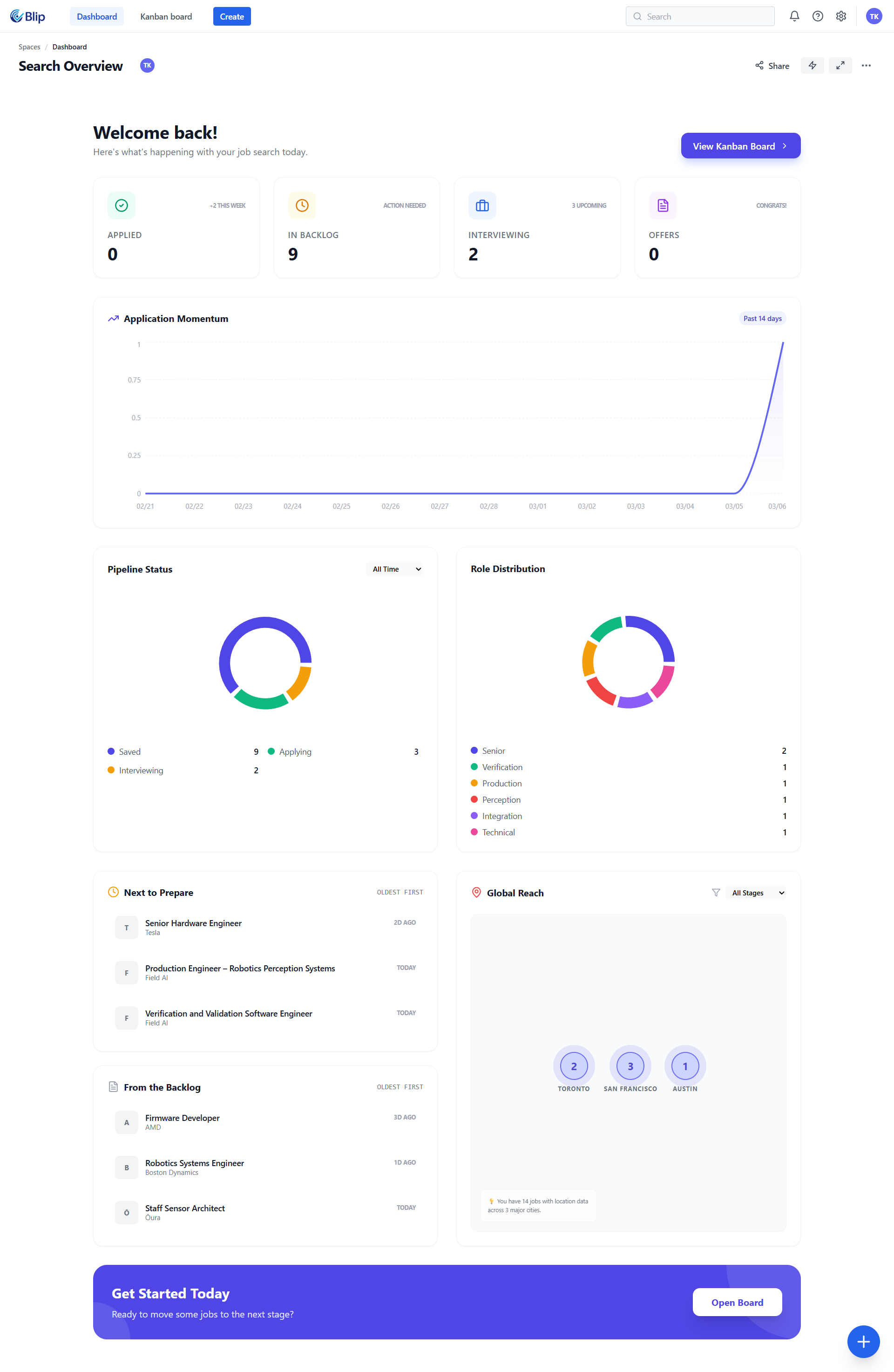
Instead of juggling spreadsheets and bookmarks, Blip gives you a Jira-style dashboard for your job search.
You can see applications moving through stages like:
- Backlog
- Applied
- Interview
- Offer
The goal is simple: make your job search observable and manageable.
The Core Idea
Most job trackers are just glorified spreadsheets.
Blip is designed around three ideas:
1. Automated job extraction
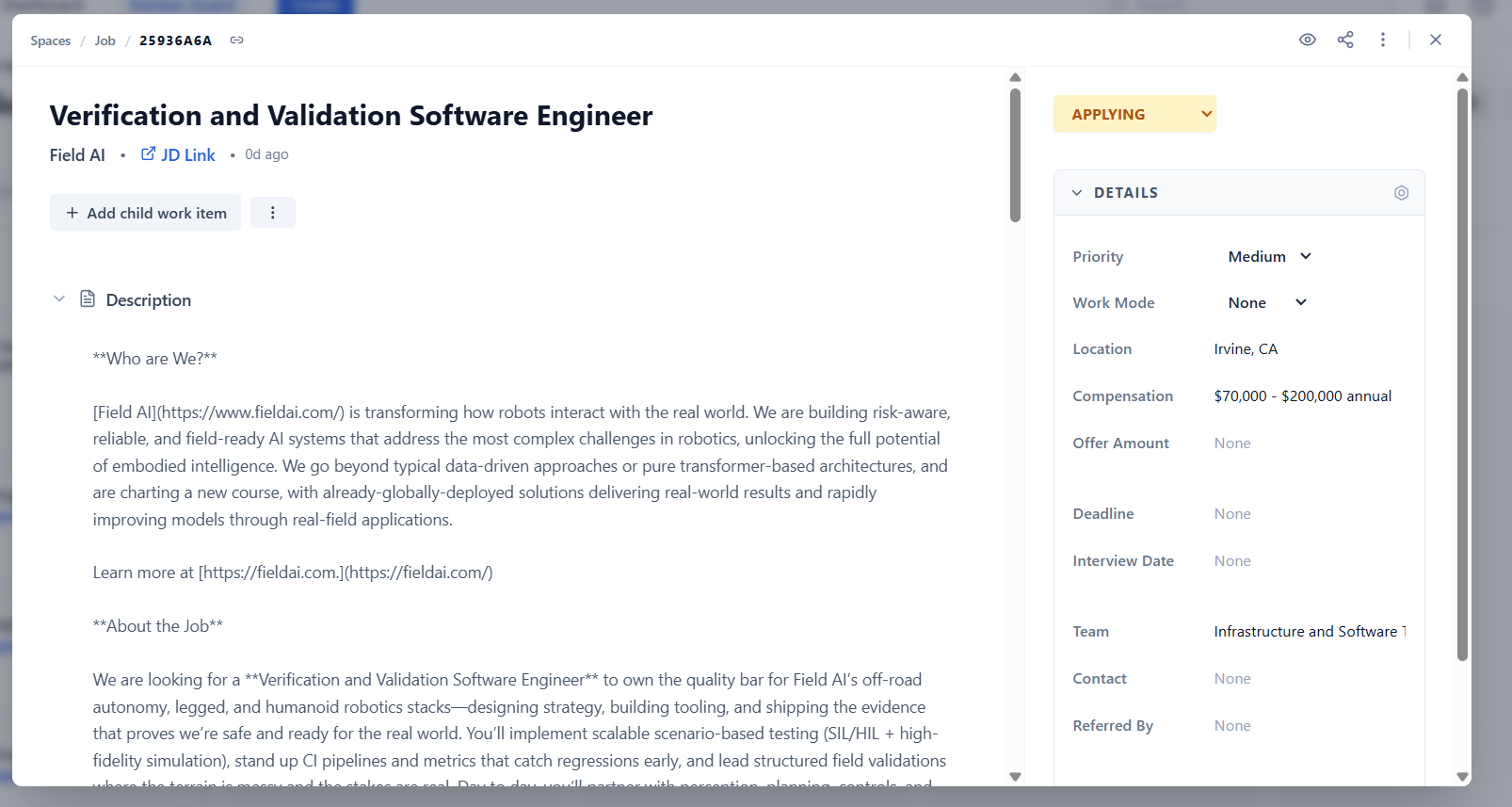
Instead of manually copying job descriptions, you paste a URL and Blip extracts the structured data automatically.
It uses scraping tools like Firecrawl, which convert web pages into clean markdown or structured JSON that can be used directly by applications.
That means Blip can automatically pull things like:
- Job title
- Company
- Description
- Salary range
- Location
and populate your application card instantly.
2. Treat the job search like a pipeline
In software development, we don't manage work with a spreadsheet.
We use boards.
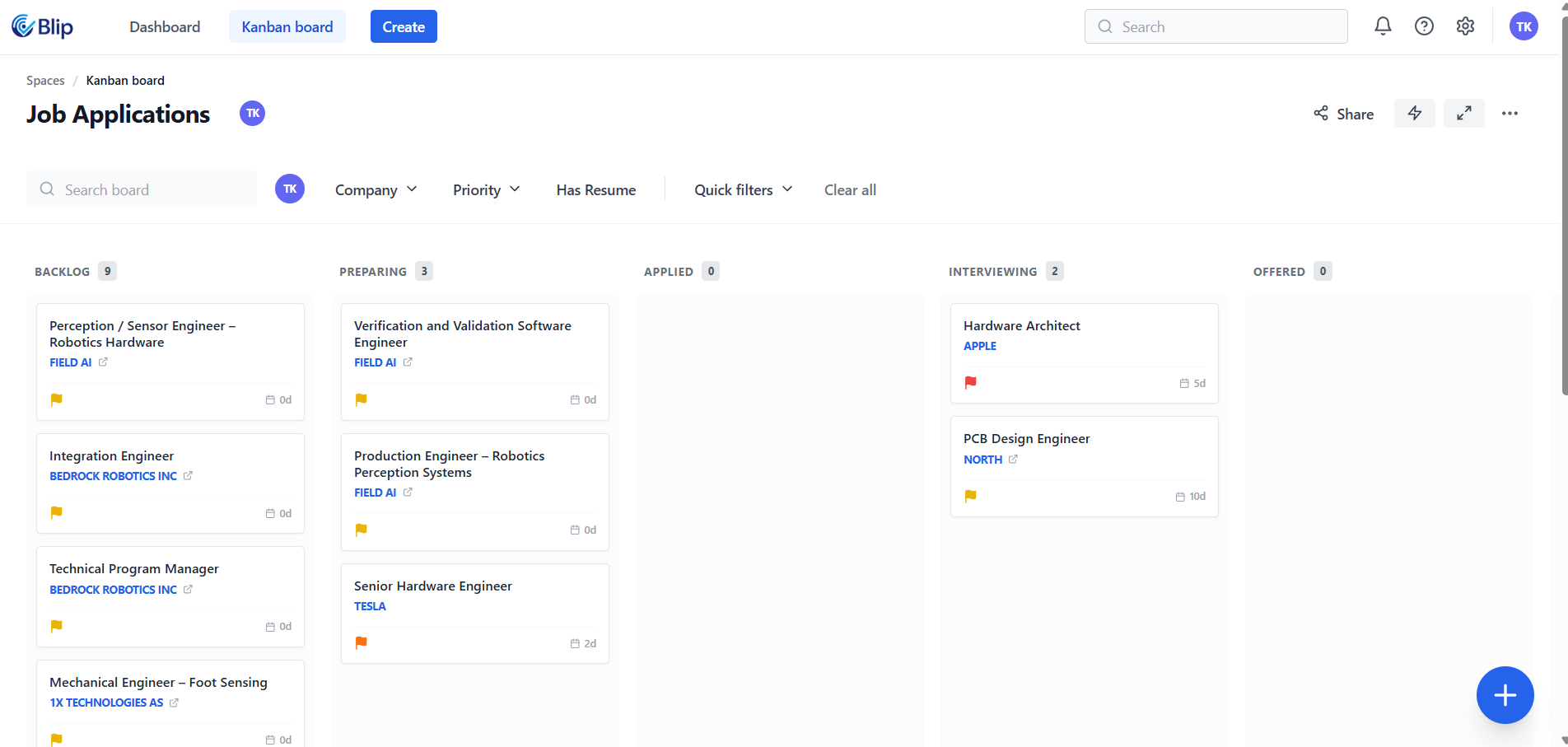
So Blip works the same way:
You drag applications across stages:
Backlog → Applied → Interview → Offer
It makes it much easier to see where things are stuck and where your opportunities actually are.
3. Track outcomes with data
Most people apply blindly to jobs and hope something works.
Blip includes simple analytics so you can actually answer questions like:
- Which roles convert to interviews?
- Which companies respond?
- What types of roles should you focus on?
Your job search becomes something you can iterate on instead of guess about.
Why I Built It
I spent hundreds of hours applying to roles in robotics, autonomy, and hardware systems.
The experience felt absurdly inefficient.
You end up doing the same things repeatedly:
- copying job descriptions
- tracking application status
- revisiting old listings
- trying to remember which recruiter contacted you
It felt like something that should obviously be automated.
So I built Blip.
The Stack
Blip is intentionally simple but designed to scale.
Key components include:
- Firecrawl for structured scraping of job pages
- background workers to process scraping jobs asynchronously
- kanban-style UI for managing applications
- analytics dashboards for tracking progress
The entire idea is to make job searching feel less like admin work and more like managing a product pipeline.
What's Next
Right now Blip is an early prototype, but there are a few directions it could go:
- AI summaries of job descriptions
- resume matching and scoring
- automated cover letter generation
- outreach tracking for recruiters
- integration with LinkedIn and job boards
The goal is simple: turn job searching into a system you can actually optimize.
Repo
Source code is linked at the top of this page. If you are job hunting and have feature ideas, reach out.